


From Gimmick to Game‑Changer: The Rise of Augmented Reality in UK Retail
Augmented reality (AR) has moved rapidly from novelty to necessity on the British high street. Once associated mainly with gaming and social media filters, AR is now being deployed by major retailers and independent shops across the UK to transform in‑store shopping experiences. As retailers search for ways to draw people back to physical locations after years of booming e‑commerce, AR is emerging as a powerful tool to blend digital convenience with the tactile reassurance of brick‑and‑mortar retail.
Across sectors as varied as fashion, home furnishings, cosmetics and grocery, AR technology is being used to personalise shopping journeys, reduce friction, and create memorable, shareable experiences. For UK retailers facing intense competition and rising operating costs, augmented reality is not just a technological curiosity; it is increasingly a strategic response to changing consumer expectations.
What Augmented Reality Means in a Store Environment
In the context of in‑store shopping, augmented reality refers to digital elements overlaid onto the physical environment, typically viewed through a smartphone, tablet, smart mirror or dedicated in‑store screen. Rather than replacing the physical store, AR enriches it with layers of information, interactive content and virtual products.
Common in‑store AR applications in the UK include:
- Virtual try‑on mirrors for clothing, shoes, eyewear and accessories
- AR beauty counters that simulate makeup and skincare effects on a shopper’s face
- Furniture and home décor visualisers that show how items would look in a room
- Interactive product information overlays when a customer scans a barcode or shelf label
- Gamified treasure hunts and loyalty experiences triggered via QR codes or store beacons
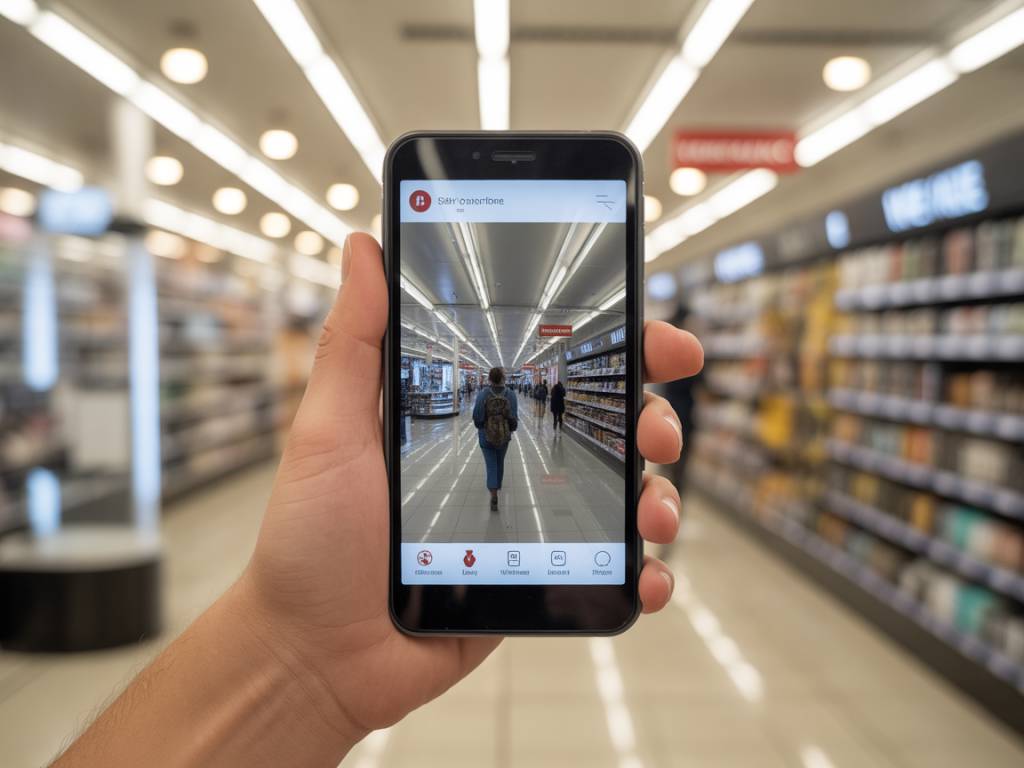
- AR wayfinding tools that guide customers to items on their shopping list in large stores
These experiences are not identical to virtual reality (VR). Instead of immersing the shopper in a fully digital environment, AR keeps the real store at the centre and simply adds a digital layer. For many British consumers, that blend of real and virtual feels less alien and more practical than a full VR headset experience.
Why UK Retailers Are Embracing AR In‑Store
Several structural pressures on the UK retail market are pushing brands to experiment with AR. Footfall in many high streets and shopping centres remains below pre‑pandemic levels, while labour and energy costs have risen sharply. At the same time, British shoppers have become used to the data‑rich, personalised convenience of online platforms.
Augmented reality offers a way to address these challenges:
- Enhancing the value of visiting a store: AR experiences give consumers a reason to leave the sofa. A trip to a fashion flagship in London’s West End or a regional shopping centre in Manchester can be framed as an interactive, almost entertainment‑style outing rather than a purely functional purchase mission.
- Bridging online and offline channels: Many AR tools are accessed through the retailer’s own app, allowing the brand to connect in‑store behaviour with online profiles, wishlists and loyalty schemes.
- Supporting staff during labour shortages: AR can provide on‑demand information, tutorials and styling advice without relying entirely on sales assistants, which is attractive when staffing levels are tight.
- Reducing returns and buyer hesitation: By giving customers a more realistic sense of fit, colour, proportion and function before they buy, AR aims to cut costly returns and exchanges.
In practice, the roll‑out has been uneven. Large chains and tech‑savvy brands are leading, while many smaller retailers are still observing. However, the direction of travel in the UK market is clear: augmented reality is becoming embedded in long‑term digital transformation strategies rather than treated as a one‑off marketing stunt.
Fashion and Footwear: Virtual Try‑On Goes Mainstream
Fashion retail is one of the most visible areas where augmented reality is reshaping in‑store behaviour. British apparel chains and luxury brands are experimenting with digital mirrors and smartphone‑based AR features that allow shoppers to see garments and accessories on their own bodies without physically changing clothes.
Virtual fitting rooms and AR mirrors can, for example:
- Overlay different sizes and colourways on a shopper’s reflection
- Suggest complementary items such as jackets, shoes or bags in real time
- Allow quick side‑by‑side comparison of multiple looks
- Share images or short videos directly to social media or messaging apps
For footwear, AR visualisation enables customers to point a smartphone camera at their feet and see how trainers, boots or heels would look from multiple angles. This is particularly relevant in the UK sneaker market, where limited‑edition drops and design‑led purchases play a major role.
From a consumer‑behaviour perspective, these tools tap into two strong UK trends: the desire for convenience and the inclination to seek peer validation online before making discretionary purchases. Retailers hope that by reducing the friction of trying on items in fitting rooms, they can convert more browsing into purchases while also collecting data about which styles attract attention, even if they are not immediately bought.
Beauty Counters and AR Make‑Up Trials
Beauty and personal care brands in the UK have been early adopters of augmented reality. At major department stores and standalone boutiques, shoppers increasingly encounter AR‑enabled tablets or smart mirrors that apply virtual lipstick, foundation, eyeshadow and hair colour in real time.
This technology addresses several barriers common in the cosmetics category:
- Hygiene concerns: Post‑pandemic, many British consumers remain wary of shared testers. AR allows experimentation without physical contact.
- Shade matching: UK beauty shoppers know the difficulty of choosing the right foundation or concealer under harsh store lighting. AR engines can analyse skin tone and recommend shades, then show them applied virtually.
- Speed and variety: Testing 10 lip colours physically would be impractical; doing so virtually takes seconds.
Brands use these AR trials not only to improve the immediate in‑store experience, but also to connect that experience to e‑commerce. Many systems save favourite looks to an account or send a summary by email, nudging future online purchases and reinforcing brand loyalty.
Home and Furniture Retail: Visualising Scale in Tight UK Spaces
Home furnishings and DIY retailers in the UK face a very specific challenge: many British homes, especially in urban centres, are compact and idiosyncratic in layout. Even when visiting a large furniture showroom, it can be difficult for shoppers to imagine whether a sofa will dominate a small living room or whether a wardrobe will fit under a sloping ceiling.
Augmented reality is increasingly employed to bridge this imagination gap. While much of the AR visualisation occurs in customers’ homes via mobile apps, in‑store applications are gaining traction:
- Tablets in showrooms that allow customers to scan a product and then superimpose it on a scaled 3D model of a typical UK room layout
- AR screens that show different fabric options, colours and configurations on a core piece of furniture
- Interactive planning tools for kitchens and storage, linking measurements taken at home with an in‑store design consultation
By providing a more accurate impression of scale and proportion, these tools aim to reduce the risk of misjudged purchases, which are particularly costly to return or exchange. For retailers, there is also an upselling opportunity: once a basic layout is visualised, accessories and complementary items can be added digitally, encouraging larger basket sizes.
Grocery and Everyday Shopping: Subtle but Significant Uses of AR
In UK grocery and everyday retail, augmented reality tends to appear in more subtle forms than in fashion or beauty. Large supermarkets and convenience chains are experimenting with AR‑enabled shelf labels, promotional end‑caps and loyalty app integrations.
Common use cases include:
- Scanning a product to reveal nutritional breakdowns, allergen information and recipe suggestions
- AR‑based treasure hunts that reward customers for visiting specific aisles or discovering new products
- Wayfinding overlays guiding shoppers to items on a digital shopping list, especially in large out‑of‑town superstores
These features tie directly into the priorities of many British consumers: value, health, and time‑saving. They also align with the increasing importance of retailer loyalty apps in the UK, where personalised pricing and digital coupons are becoming a core part of the weekly shop.
Data, Privacy and Consumer Trust
The roll‑out of in‑store AR in the UK raises questions about data protection and consumer consent. Augmented reality systems can, in theory, capture a great deal of behavioural data: which products are virtually tried on, how long a shopper engages, and even biometric details such as face shape or body measurements.
Operating in a GDPR‑regulated environment, UK retailers must be explicit about what information is collected, how it is stored and with whom it is shared. There is an emerging tension between the commercial value of detailed behavioural data and the cultural sensitivity around surveillance and profiling.
Several British retailers have responded by adopting the following practices:
- Providing clear, on‑screen consent prompts before activating AR features that require camera access
- Allowing “guest mode” usage that does not link AR interactions to a named customer account
- Communicating data usage policies prominently at AR stations and within store apps
How successfully retailers manage these trust issues may shape public attitudes towards AR more broadly. While many UK consumers appreciate personalisation, there is also a vocal segment that is wary of any technology perceived as intrusive or overly data‑hungry.
Accessibility and the Risk of a Digital Divide
As augmented reality becomes a larger part of in‑store retail strategy, questions of accessibility come to the fore. Not every shopper owns a recent smartphone capable of running advanced AR apps, and not everyone is comfortable with scanning QR codes or navigating digital menus in a busy store.
From an inclusion perspective, UK retailers face several practical considerations:
- Ensuring essential product information is still available through traditional signage and staff interaction
- Designing AR interfaces with large text, high contrast and clear instructions to support older shoppers or those with visual impairments
- Providing staff training so that employees can assist customers who are curious but unsure how to use AR features
If implemented thoughtfully, AR can actually support accessibility. For example, audio descriptions, sign language overlays or simplified product summaries could help shoppers with specific needs. However, if used only as a flashy marketing layer, the risk is that AR‑enhanced stores become more confusing for those already marginalised by rapid digitisation.
What Comes Next for AR and In‑Store Shopping in the UK
Looking ahead, several trends are likely to shape how augmented reality evolves on the British high street and in retail parks:
- Deeper integration with loyalty and payment systems: AR interactions are expected to link more seamlessly with digital wallets, personalised offers and spend tracking.
- More context‑aware experiences: As sensors and store analytics improve, AR content will adjust to time of day, crowd levels and local demographics.
- Standardisation across chains: Rather than experimental pilot projects in a handful of flagship locations, AR is likely to become a standard expectation in certain sectors, particularly fashion and beauty.
- Collaboration between landlords and retailers: UK shopping centre operators may introduce shared AR layers for wayfinding, promotions and events that span multiple tenants.
The overall direction is towards a retail landscape in which physical and digital channels are no longer viewed as competitors, but as interdependent parts of a single ecosystem. Augmented reality is one of the clearest manifestations of this shift. For British consumers, the immediate impact may be more enjoyable, informative and tailored shopping trips. For retailers, the strategic stakes are higher: AR represents both an opportunity to differentiate in a crowded market and a test of their ability to innovate responsibly.