


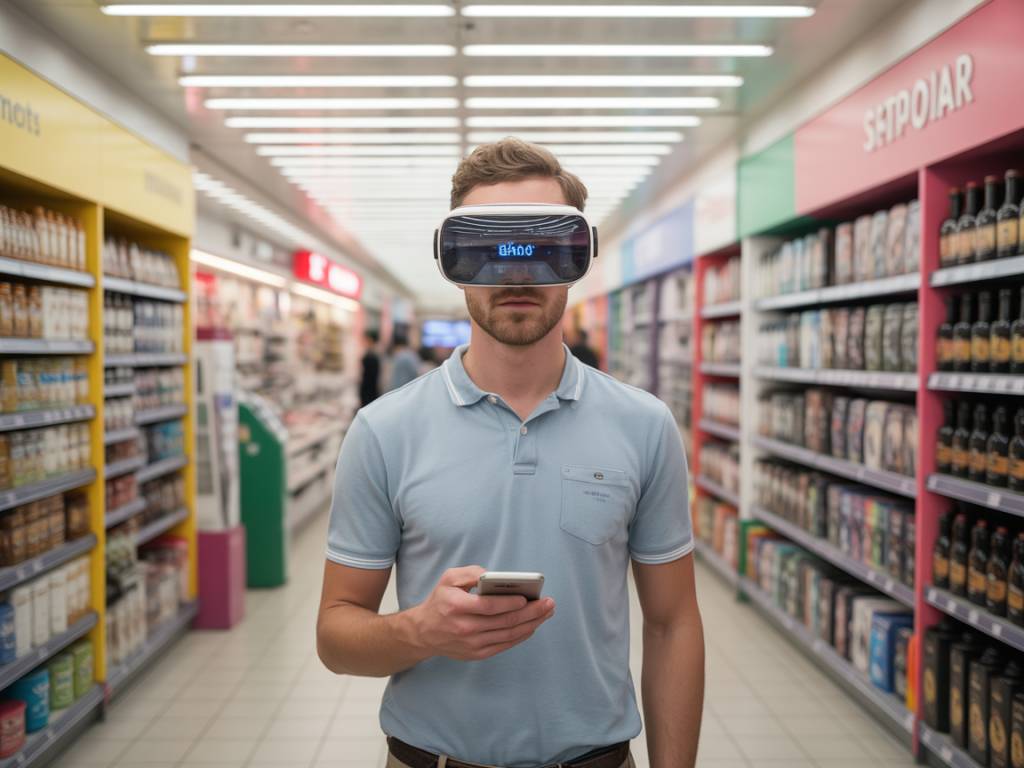
The Rise of Augmented Reality in UK Retail
Across the UK, high streets and shopping centres are quietly undergoing a technological shift. Augmented reality (AR) – once associated mainly with gaming and entertainment – is now reshaping the in‑store shopping experience. From virtual try‑ons to interactive product information, AR is becoming a core part of retail strategy for brands keen to bridge the gap between online convenience and physical engagement.
This transformation is driven by several converging trends: the rapid adoption of smartphones, the growth of e‑commerce, and shifting consumer expectations around personalisation and experiential shopping. For retailers in the UK, augmented reality in stores is no longer a futuristic concept. It is emerging as a practical tool to drive footfall, increase basket size, and keep brick‑and‑mortar spaces relevant in a digital-first world.
What Augmented Reality Looks Like on the UK Shop Floor
AR in physical stores generally overlays digital content – images, animations, 3D models, or information – onto the shopper’s real-world environment through a smartphone, tablet, smart mirror, or dedicated display. In the UK retail sector, the most common in‑store AR applications include:
- Virtual try‑on stations where customers can see how clothing, eyewear, make-up or accessories look on them without physically trying them on.
- AR product visualisers that allow shoppers to view items in 3D, rotate them, or see them in different colours and configurations.
- Interactive shelf and packaging experiences that unlock extra information, reviews or storytelling when scanned with an app.
- Wayfinding and store navigation tools that guide customers to specific products or departments via AR arrows and prompts.
- Immersive brand zones that transform parts of the store into interactive spaces linked to campaigns, games or educational content.
These applications vary greatly between sectors, yet they share a common goal: to make the physical store more engaging, informative and personalised, in a way that complements online shopping rather than competes with it.
Fashion and Beauty: The Front Line of AR Innovation
Nowhere is augmented reality in UK retail more visible than in fashion and beauty. High street chains, department stores and premium brands are all experimenting with ways to reduce friction in fitting rooms and beauty counters.
Virtual fitting rooms on tablets or smart mirrors can map garments onto a shopper’s body, adjusting for movement and allowing for rapid outfit changes. Lipstick, foundation and eyeshadow can be “applied” digitally in real time using facial recognition. These AR try‑on tools deal directly with longstanding retail pain points: queueing for fitting rooms, hygiene concerns around testers, and the time required to try multiple shades or styles.
For retailers, the benefits are clear. Augmented reality can encourage experimentation with new looks, extend browsing time and increase the likelihood of additional purchases. For customers, it offers a sense of control and reassurance, especially when buying higher-value items where fit or shade accuracy is crucial.
Home, Furniture and DIY: Visualising Products in Context
Another sector where AR is gaining traction on the UK high street is homeware and furniture. Here, the focus is not only on in‑store displays, but also on connecting the shop floor with the customer’s home through mobile AR.
In-store, interactive screens and tablets allow shoppers to configure sofas, kitchens or storage systems and view them from all angles. Many retailers now encourage customers to scan QR codes on showrooms to pull 3D models of furniture onto their phones. Once at home, the same AR tools can be used to place a digital version of the product in a real living room or bedroom, checking scale, colour and style before purchasing.
Within stores, the combination of AR and physical samples helps customers move from inspiration to decision more confidently. The ability to visualise how a product will actually look in context – whether that is a paint colour on a wall or a bed in a small flat – reduces uncertainty and can significantly cut down on returns.
Grocery and FMCG: From Shelf to Story
In UK supermarkets and convenience stores, augmented reality is less about spectacle and more about information. Brands and retailers use AR to provide richer product stories, nutritional details and promotions directly at the shelf.
Shoppers might scan a product label with a retailer’s app to see animated content explaining provenance, sustainability credentials or recipe ideas. Family-focused campaigns use AR games linked to cereal boxes or snack packs to encourage repeat purchases. For retailers, these in‑store AR experiences help differentiate own-brand products, bring digital loyalty schemes into the aisle, and deepen engagement without needing more physical space on packaging or shelving.
As concerns about health, transparency and environmental impact grow among UK consumers, AR offers a way to answer complex questions in a simple, visual and accessible format while the shopper is still in decision-making mode.
How Augmented Reality Bridges Online and Offline Shopping
One of the most powerful aspects of augmented reality in UK stores is its role as a bridge between physical and digital channels. Rather than treating e‑commerce and brick‑and‑mortar as separate worlds, AR-enabled experiences support a genuinely omnichannel retail strategy.
Key ways AR closes this gap include:
- Scan and learn: Customers in-store can scan a product with a brand or retailer app to pull up online reviews, video tutorials, stock levels and related items.
- Shared accounts and wishlists: Virtual try‑on sessions or AR product explorations can be saved to a profile or wishlist that follows the shopper from the shop floor to their home laptop or mobile browser.
- Click‑and‑collect with AR assistance: When customers collect online orders in store, AR can surface styling tips, accessories or complementary products, effectively turning collection points into discovery spaces.
- Data feedback loops: Behaviour in AR experiences – which products are tried on, which colours are explored – feeds back into merchandising, online recommendations and targeted marketing.
This integration responds to the way UK shoppers now move fluidly between channels: researching on mobile, trying in-store, and completing purchases wherever is most convenient. Augmented reality becomes a common layer that keeps the brand experience coherent.
The Business Case: Why UK Retailers Are Investing in AR
Beyond the novelty factor, several practical reasons explain why retailers across the UK are allocating budget to in‑store AR technology.
- Increased engagement: Interactive digital experiences encourage shoppers to spend more time in-store. Dwell time often correlates with higher sales, especially if AR tools are well integrated with product discovery.
- Higher conversion rates: When customers can virtually try products, view them in detail and access richer information, they are more likely to make a purchase and less likely to regret it, reducing returns.
- Personalisation at scale: AR experiences can adapt in real time to an individual’s preferences, past purchases or profile data, providing tailored recommendations without needing a staff member for every shopper.
- Differentiation in a competitive market: As UK high streets struggle with store closures and rising costs, offering a distinctive, technology-enabled shopping journey can be a crucial way to stand out.
- Data-driven decision-making: Every interaction with an AR tool generates anonymised data that can inform product development, store layout, pricing strategies and marketing campaigns.
Consumer Adoption: What UK Shoppers Really Think
While any new technology faces a gap between hype and everyday use, surveys and pilot programmes suggest a steady appetite for augmented reality among UK consumers. Younger shoppers, in particular, are comfortable using their smartphones in‑store and often expect brands to offer digital enhancements.
Common motivations for using AR include:
- Reducing uncertainty about how a product will look or fit.
- Making shopping more enjoyable and less transactional.
- Accessing more detailed, transparent information at the point of sale.
- Saving time by narrowing choices before trying on or buying.
However, adoption depends heavily on ease of use. Shoppers are unlikely to download multiple apps for different stores or navigate complex interfaces. The most successful AR retail experiences in the UK tend to be those that work seamlessly within existing retailer apps or via web-based AR that opens directly from a QR code.
Challenges and Barriers to Wider Deployment
Despite its potential, augmented reality in UK brick‑and‑mortar retail faces several practical obstacles. One is cost: high‑quality AR solutions, especially those involving bespoke hardware such as smart mirrors or headsets, require significant investment in equipment, content creation and maintenance.
Another challenge is integrating AR into the existing store environment without disrupting the flow of customers or overloading staff. Retail teams must be trained not only to support the technology, but also to understand how to present it as a useful tool rather than a gimmick.
Connectivity can also be an issue. Many AR experiences depend on robust Wi‑Fi or mobile data coverage in-store, which is not always guaranteed in older buildings or underground shopping centres. Retailers must ensure that the technical foundation is strong enough to support these experiences reliably.
Finally, there are concerns around privacy and data security. UK shoppers increasingly scrutinise how their personal data and imagery are used. Retailers deploying AR features that rely on facial recognition, body scanning or behavioural tracking need to be transparent, compliant with UK data protection regulations, and clear about the value exchange for consumers.
What the Future of In‑Store AR in the UK Could Look Like
As technology matures and hardware becomes less obtrusive, augmented reality in UK stores is likely to move beyond standalone features into a more holistic part of the retail environment. Several developments are already on the horizon:
- Wearable AR: Lightweight glasses and headsets could allow hands‑free navigation, product information overlays and guided shopping tours, although mainstream adoption may still be some years away.
- AI‑driven personal shopping assistants: Combining AR with artificial intelligence could enable highly tailored recommendations, styling advice and dynamic promotions triggered by what the shopper is looking at.
- Standardised platforms: As more retailers adopt similar AR frameworks, consumers may be able to use a single interface across multiple brands, lowering the barrier to everyday use.
- Deeper integration with payments and loyalty: AR could support frictionless checkout, allowing shoppers to scan items in view, apply personalised offers and pay without queuing.
For UK retailers, the strategic question is no longer whether augmented reality will influence in‑store shopping, but how quickly and intelligently they can integrate it into their broader customer experience. Those who succeed are likely to build physical spaces that feel less like static shops and more like interactive, data-informed environments where digital and real worlds genuinely coexist.