


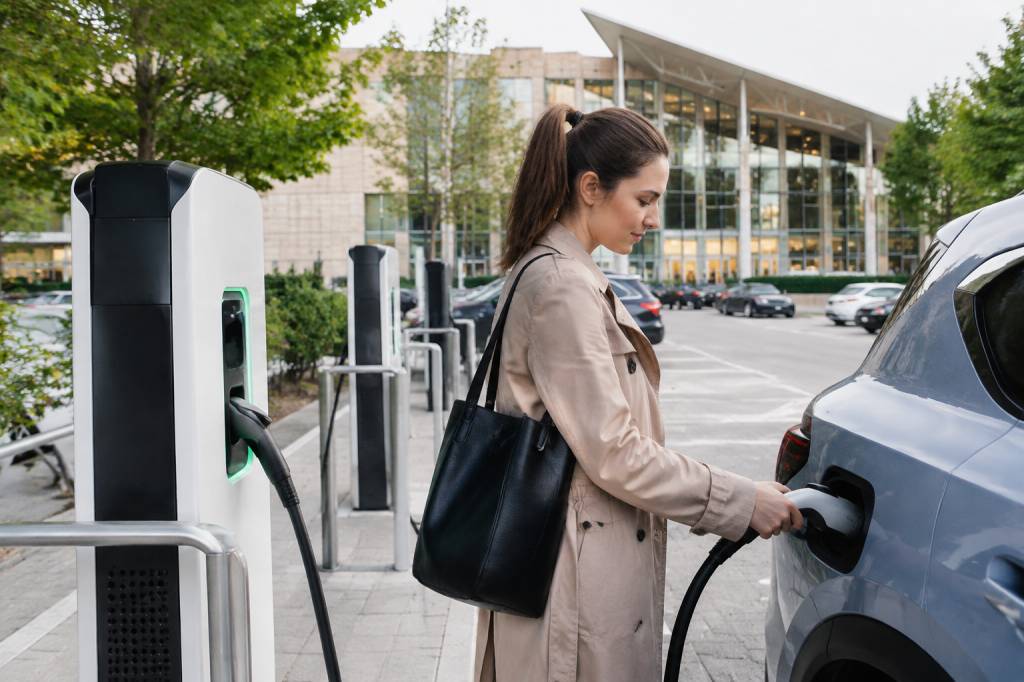
Planning a shopping trip in an electric car? Bluewater makes it easy to combine a charge with a browse, lunch or a cinema visit. The important thing to know is that charging-point locations, availability and prices can change, so a little planning will help you avoid arriving with a low battery and a long queue.
Here’s what drivers need to know about finding EV charging at Bluewater, checking the cost and making the most of your stop.
Where can you charge an electric car at Bluewater?
Bluewater has EV charging facilities in its car parks, so you can plug in while visiting the shopping centre. The exact bay locations and the number of working chargers may change as equipment is updated or maintained. Before setting off, check Bluewater’s official website or contact the centre for the latest location information.
For a more detailed, live view, use an EV charging map or your vehicle’s navigation system. Search for Bluewater, Greenhithe, or the centre’s postcode, DA9 9ST, and filter by connector type and charging speed. Apps such as Zapmap and networks’ own apps can show reported availability, tariffs and recent driver updates.
Bluewater is a large site, so it is worth checking which car park is closest to the shops or facilities you plan to visit. If you are meeting someone for lunch at one end of the centre, a charger at the other end may mean an unnecessary walk back to your car. Follow the centre’s signs once you arrive, and only park in a bay marked for EV charging when you intend to charge.
What types of chargers are available?
Charging speeds and connectors can vary between locations. Some units are designed for a longer shopping visit, while faster chargers may suit a shorter stop. The most useful details to check are the charger’s power output, connector type, number of charging bays and whether the unit is currently available.
Most modern electric cars in the UK use a Type 2 connector for AC charging and a CCS connector for rapid DC charging. Some older models may use CHAdeMO for rapid charging. Check your car’s handbook or charging-port information before you travel. A charger can be available but still unsuitable if it does not match your vehicle.
Don’t assume that the charger with the highest advertised power will deliver that speed to your car. The vehicle’s maximum charging rate, battery temperature, state of charge and charger sharing can all affect how quickly energy is added. In practical terms, a rapid charger might be handy for a quick top-up, but many drivers will find a slower unit perfectly suitable while they shop.
How much does EV charging at Bluewater cost?
There is no single price that applies to every charger at Bluewater. The rate depends on the charging network, the type of charger and sometimes how you pay. Prices can change, so check the tariff displayed on the charger, in the network’s app or on its website before you start.
As a simple illustration, if a charger costs 60 pence per kilowatt-hour and you add 30 kWh, the energy cost would be £18. That is a calculation example, not a quoted Bluewater tariff. Your actual total may also depend on any connection fee, minimum session charge, idle fee or parking terms shown by the operator.
Before plugging in, look for:
- The price per kilowatt-hour, including any applicable taxes.
- Any separate session or connection fee.
- Whether the price differs for contactless payment and app users.
- Any time-based or idle fee for leaving the car connected after charging ends.
- The operator’s rules for ending the session and moving your vehicle.
Some networks offer membership plans with lower charging rates, but a monthly subscription is only worthwhile if you use that network often enough. For a one-off shopping trip, paying the standard rate may be simpler. Compare the full cost rather than choosing a charger based on its headline price alone.
How to start a charging session
The process depends on the charger, but it is usually straightforward. Park in a designated charging bay, check the connector and tariff, and follow the instructions on the unit. You may need to start the session through an app, tap a contactless card or use a network membership card.
If you are using an app, set it up before your trip. Creating an account, adding a payment method and learning where the “start” button is can be less fun when you are standing in a car park with shopping bags and a phone on 4% battery. Keep a payment card handy too, in case the app has trouble connecting.
Once charging begins, confirm that the charger and your car both show an active session. If the unit displays an error, try the operator’s troubleshooting steps or use its customer support number. Don’t leave a session running if you are unsure whether the car is charging; check the vehicle’s dashboard or charging app.
How long should you allow?
There is no one-size-fits-all answer. Your charging time depends on how much energy you need, your car’s charging capability and the charger’s speed. A short visit may add enough range for the journey home, while a longer shopping trip could give you time for a more substantial charge.
Think about your journey rather than aiming for a completely full battery. If you have enough charge to get home comfortably, there may be no need to wait for the final few per cent. Charging can also slow as the battery approaches full, particularly on a rapid charger. A sensible top-up can leave you free to enjoy your day instead of watching the percentage creep upwards.
For example, a driver arriving with plenty of range for the return journey might charge only while having lunch. Someone travelling from farther away could plan a longer session while shopping. Your car’s range estimate and the weather matter too: cold temperatures, motorway speeds and heavy use of heating or air conditioning can increase energy consumption.
Planning your visit around charging
A little preparation makes charging feel like part of the day rather than an extra chore. Check the charger map before you leave, note a backup option and make sure your car’s navigation is set to the correct Bluewater entrance or car park. If you are travelling at a busy time, live availability can be especially useful.
- Check your battery level and estimate the energy you need for the return trip.
- Confirm the connector type and charging speed suit your vehicle.
- Look at the live status shortly before you arrive, not only the night before.
- Save the charger operator’s app or support details on your phone.
- Bring a payment card and keep your charging cable accessible if your car requires one.
- Set a reminder to move your car when charging is complete, if the bay is in demand.
If a charger is occupied, avoid waiting in a way that blocks access for other drivers. Check the live map for alternatives and follow any signs or site instructions. A charger marked as available in an app may still be out of service by the time you arrive, so having a backup plan is more useful than assuming the first choice is guaranteed.
Charging etiquette in the car park
Charging bays are there to help drivers add energy, not to provide premium parking for the whole day. Move your car when it has finished charging, especially if the operator applies an idle fee or other time limit. Even where there is no fee, freeing the bay helps the next driver.
Likewise, don’t unplug another vehicle unless the owner has clearly given permission and the charger’s instructions allow it. If a cable or connector appears damaged, report it to the charging network rather than trying to fix it yourself. And if you are using a public charger for the first time, take a moment to read the screen before connecting: different networks can have slightly different steps.
Is it worth charging while you shop?
For many visitors, yes. A shopping trip gives you time to charge without sitting in the car, and the convenience can be more valuable than chasing the cheapest possible rate elsewhere. If your battery is already healthy and you are only popping in briefly, however, you may prefer to save the session for another stop. It depends on your route, schedule and what you need from the car.
Compare the cost with your alternatives, including charging at home or at a nearby public charger. Home charging is often cheaper for drivers who have access to it, but not everyone does. A public charge at Bluewater can still be a practical choice when it fits naturally into your visit and gives you enough range for the rest of the day.
What if the charger is not working?
First, check the display and make sure the connector is fully inserted and the session has been started correctly. If the charger still fails, note its identification number and contact the operator using the details shown on the unit. The shopping centre may be able to direct you to another location, but the charging network is generally best placed to help with payment or equipment faults.
Keep a second charging option in mind, particularly if you are travelling a long distance or arriving with a low battery. Your car’s navigation system can help locate alternatives nearby, while charging maps may show other public points around Greenhithe and the wider Kent area. Always check that an alternative is open and compatible before driving there.
A smoother Bluewater charging trip
Bluewater can be a convenient place to top up while you shop, eat or catch a film. The key is to verify the latest charger locations, live availability and prices before you arrive. Check the connector and payment method, allow time for the charge your journey actually requires, and move your vehicle promptly when the session ends.
With those simple steps, charging becomes just another part of the visit. You can get on with the important decisions, like whether you really need another tote bag, while your car picks up the energy for the journey home.